A music marketplace where underground scenes get found first.
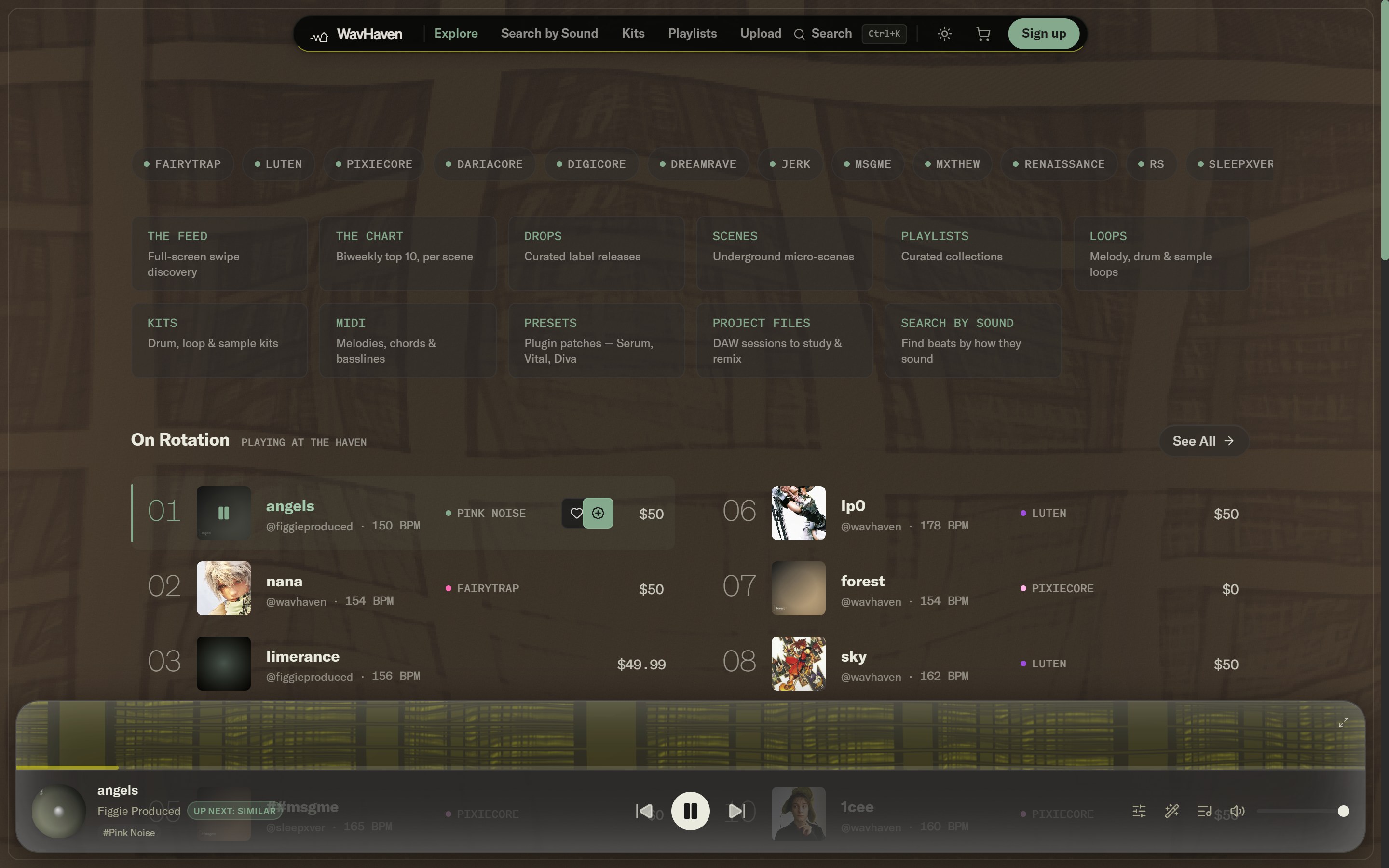
Every marketplace we used as producers felt like the same storefront: upload, tag, list, disappear into one undifferentiated pool. The scenes we actually lived in (rage, jerk, whatever breaks next) had no home on any of them. WavHaven is built around those scenes: the community and the discovery engine both know what scene you belong to.
BeatStars, Airbit, Traktrain. They all do the same thing. You upload, set a price, and hope someone finds you.
There is no community. Nobody comes back to browse because there is nothing to come back to. WavHaven is built around the part every other marketplace skips: people who actually care about the music.
The player follows you everywhere. The visualizer band reacts to the audio in real time.
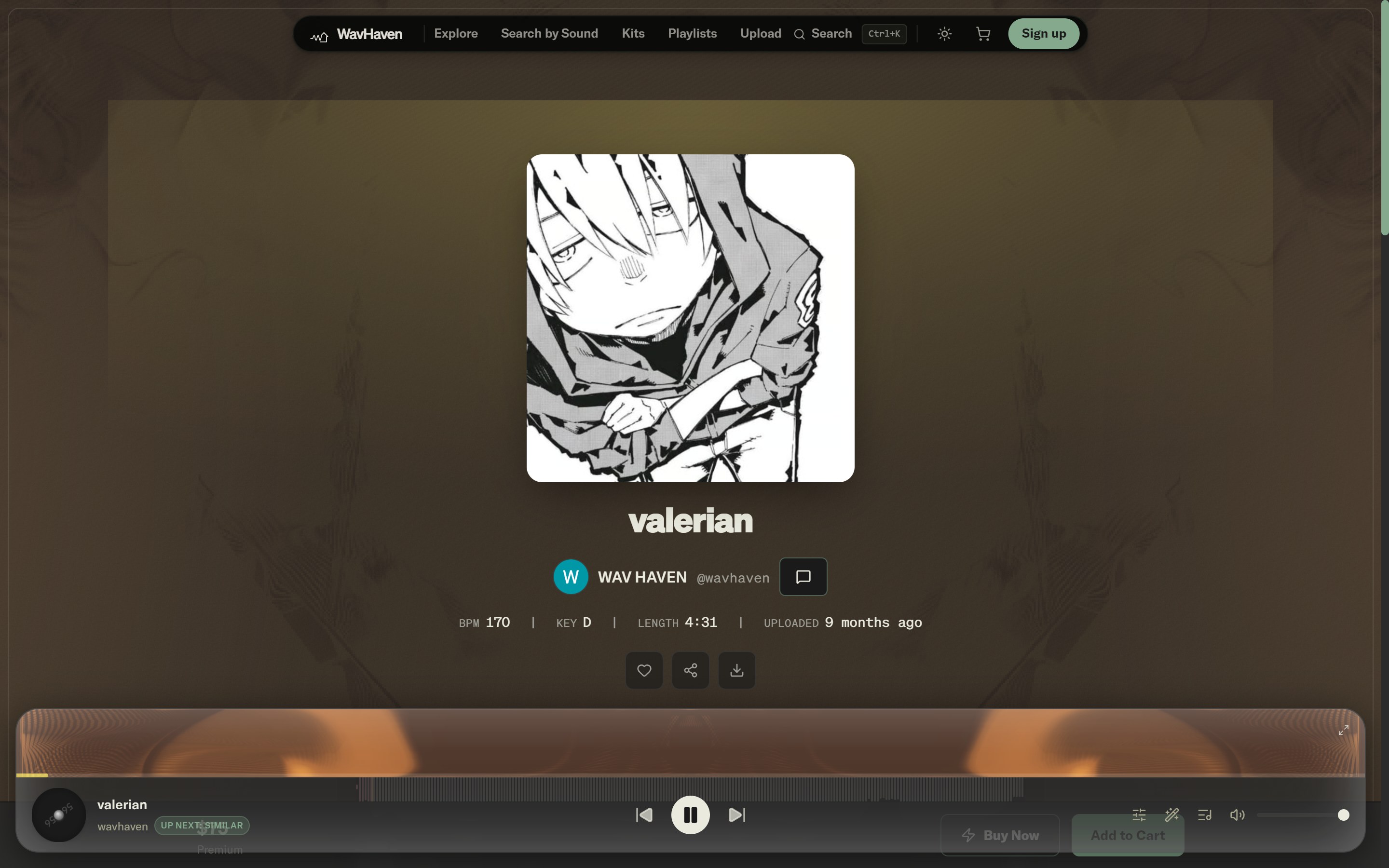
Every release gets a page: art, BPM, key, waveform, licenses. Hear it before you buy it.
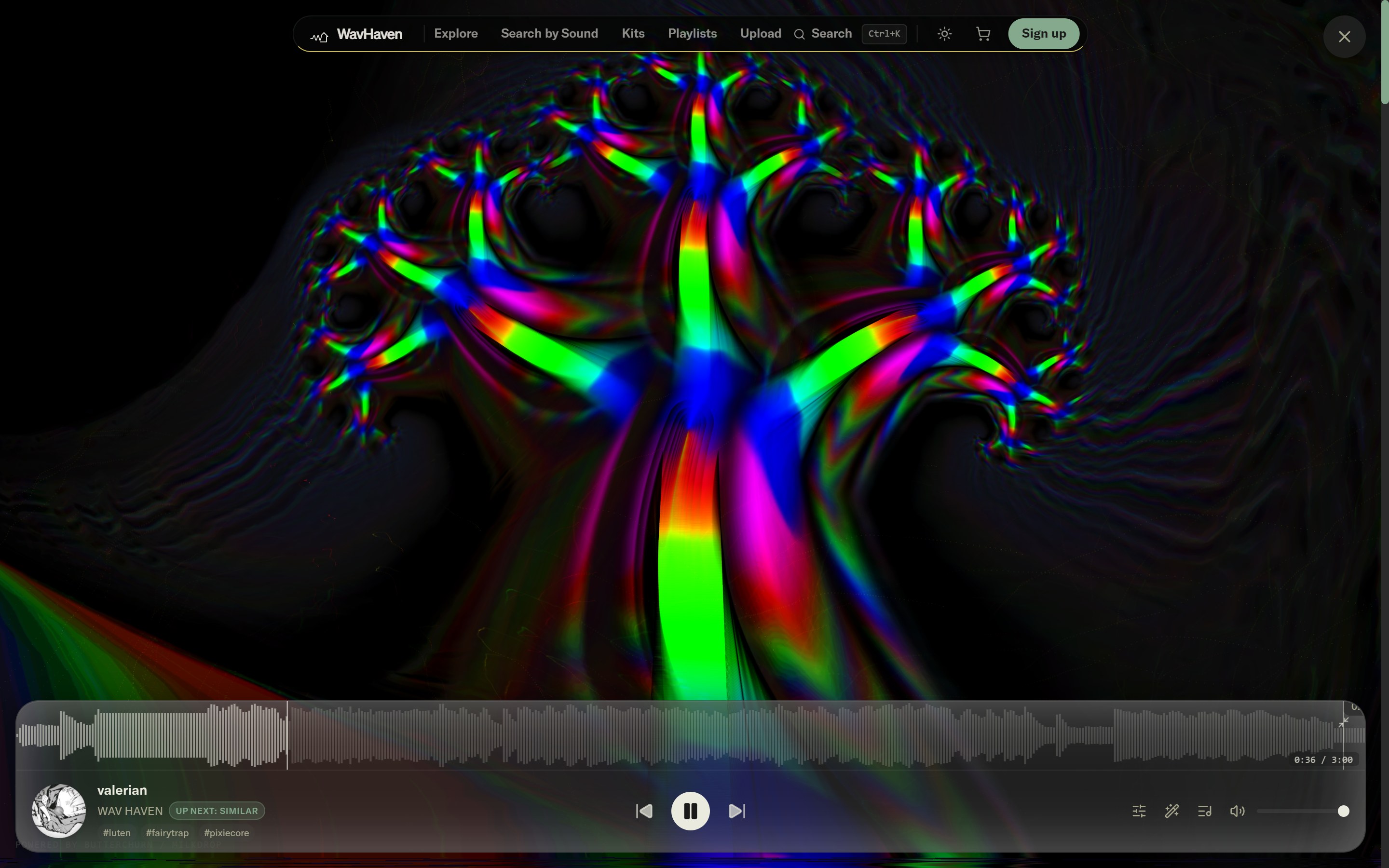
One keypress opens the fullscreen Milkdrop visualizer, Butterchurn on WebGL, driven by the live audio.
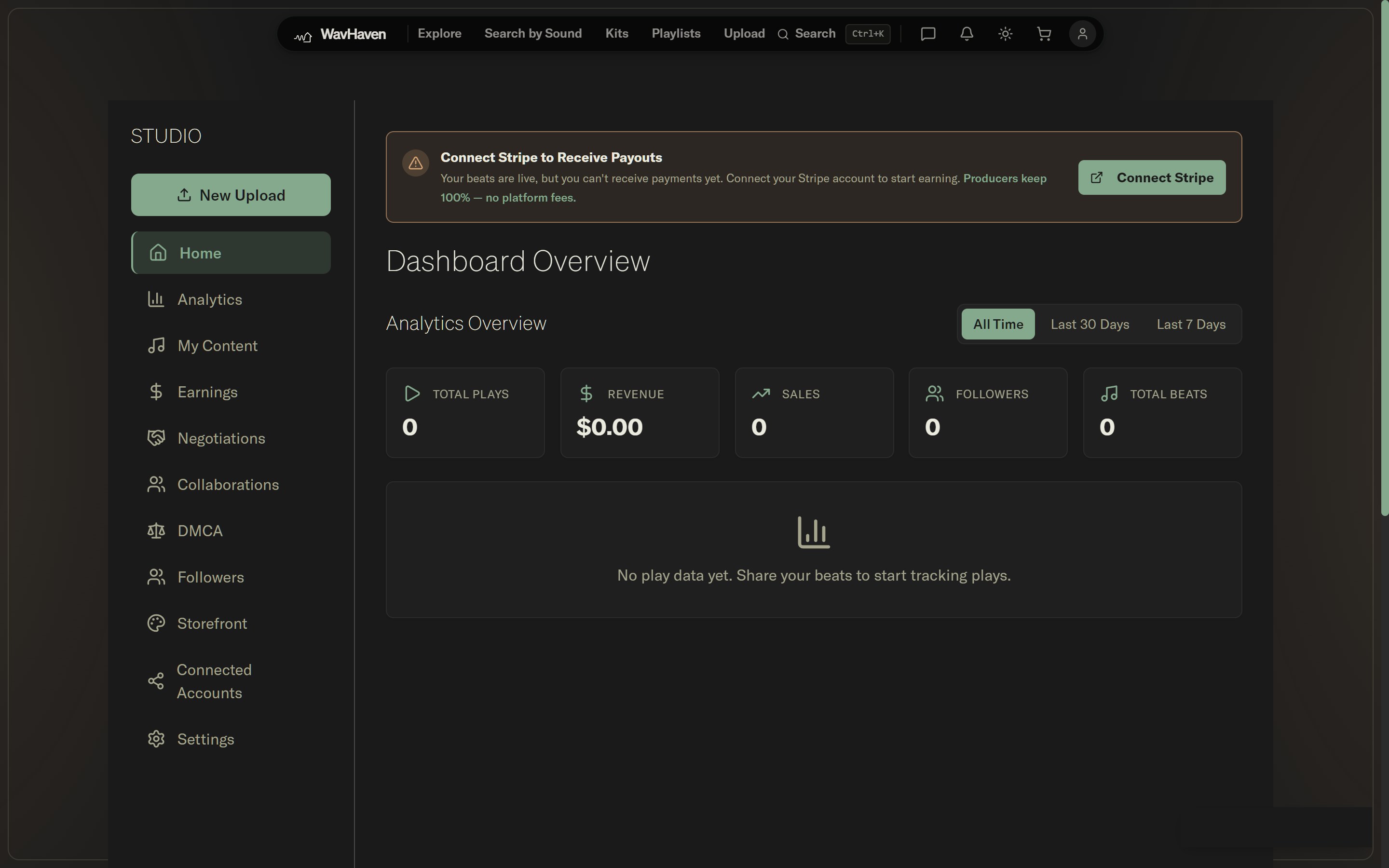
The producer studio: uploads, analytics, negotiations, payouts. Producers keep 100%.
Six algorithms run concurrently. Weights shift based on how much interaction data exists for the user.
Where it is now
WavHaven has been live at wavhaven.io since April 2026. The scene layer shipped to production in July. The discovery engine adapts to how you listen, and the community layer gives people a reason to come back between purchases.
- Live in production, server-rendered at the edge, with a deploy pipeline that verifies both
- Scene-first discovery: the globe explorer, per-scene charts, and the six-algorithm engine
- Similarity search that finds content by how it sounds, even when the tags are wrong
- Mint numbers, scene charters, dated charts, drops, and the wire, all shipped as product
- Artists keep 100% of revenue. No platform cut on top of Stripe processing
- Payments still run Stripe in test mode; the go-live checklist is the current work
Next case study